
Overview of Annihilation PDF

Download the Annihilation PDF, a free eBook under the Project Gutenberg license. It offers the first volume of Jeff VanderMeer’s Southern Reach trilogy, detailing the twelfth expedition’s four women—anthropologist, surveyor, psychologist, and biologist—into Area X. Explore the Zone’s secrets in this PDF now

Plot Summary
In the Annihilation PDF, the reader follows the twelfth expedition into Area X, a quarantined zone where nature has rewritten itself. Four women—an anthropologist, a surveyor, a psychologist who leads the team, and a biologist narrator—enter the forest of black pines, the marshes, and the strange, otherworldly landscape. The narrative unfolds through the biologist’s journal entries, revealing the crew’s gradual disorientation as the boundary between human logic and the Zone’s alien logic blurs. The psychologist, whose calm authority masks deep personal trauma, attempts to maintain cohesion, while the anthropologist records cultural artifacts that seem to defy time. The surveyor maps the shifting terrain, but the maps become unreliable as the ground itself reshapes. The biologist confronts bizarre flora and fauna that challenge the laws of biology, and her observations become increasingly fragmented. As the team ventures deeper, they encounter a mysterious tower that appears to sink beneath the earth, a place where the forest gives way to a swamp of twisted reeds and gnarled trees. The psychological tension escalates when the team’s sense of self dissolves, and each member confronts the possibility that the Zone is not a place but a force. The climax arrives when the psychologist’s leadership is tested by a revelation that the expedition’s mission may have been a trap, and the biologist must decide whether to continue or retreat. The PDF ends with an ambiguous resolution, leaving readers to ponder whether the Zone’s secrets can ever be fully understood or if the expedition merely adds another layer to its mystery.
Series Context
In the Annihilation PDF, readers encounter the opening chapter of Jeff VanderMeer’s Southern Reach trilogy, a speculative saga that redefines the boundaries of ecological horror and speculative fiction. The trilogy unfolds across three distinct novels—Annihilation (2014), Authority (2016), and Acceptance (2018)—each of which explores the enigmatic, quarantined Zone known as Area X. The first volume introduces the twelve‑woman expedition that ventures into the Zone’s surreal landscape, setting the stage for the psychological and environmental themes that reverberate throughout the series. Subsequent books shift focus to the Southern Reach organization’s bureaucratic machinery, the moral dilemmas of containment, and the lingering effects of the Zone’s influence on the protagonists’ lives. The trilogy’s narrative arc weaves together strands of ecological disruption, identity crisis, and the uncanny, culminating in a series‑wide exploration of humanity’s fragile relationship with the natural world. The Annihilation PDF thus serves not only as a standalone story but also as a crucial entry point into a broader, interconnected narrative that challenges readers to reconsider the limits of science, governance, and personal agency in the face of an unknowable wilderness. Readers who immerse themselves in this PDF will find that each chapter not only expands the mythos of Area X but also invites a meditation on the fragile boundary between human intention and the forces of nature, urging a reevaluation of our stewardship of the planet.earth
Key Characters
The PDF introduces four women: an anthropologist, a surveyor, a psychologist who leads, and a biologist narrator. Their distinct expertise shapes the expedition’s dynamic, revealing psychological tension and ecological mystery within Area X. Their dynamic fuels intrigue, hinting horrors!!!!

Anthropologist
Her field notes reveal a pattern of recurring symbols etched into the bark of trees, suggesting a form of communication. She interprets these marks as a warning, aligning them with the shifts experienced by the crew. Her meticulous record becomes a framework for understanding the Zone’s chaotic reality. in the heart of art.
Surveyor (Topographer)
Her instruments trace the invisible geometry of Area X, mapping the shifting terrain that defies conventional cartography. Each contour line she draws becomes a narrative thread, revealing how the Zone warps space itself. She records anomalies in elevation, noting sudden drops that appear only in the margins of her maps. Her data, when cross‑referenced with the anthropologist’s symbols, uncovers a hidden lattice that hints at an underlying order beneath the chaos. She measures the density of vegetation, noting how the trees bend toward the same unseen axis. Her GPS logs, however, show a drift that suggests the Zone’s coordinates are fluid, shifting with each step the crew takes. She uses triangulation to create a dynamic map that updates in real time, a living document that mirrors the Zone’s mutable reality. Her meticulous observations become a lifeline for the team, offering a way to navigate the labyrinthine forest. She also documents the psychological impact of the terrain on the crew, noting how the sense of direction dissolves as the maps become unreliable. In the final moments, her maps serve as a testament to the persistence of human curiosity in the face of an environment that refuses to be tamed. The surveyor’s work is not merely technical; it is an act of defiance against the unknowable forces that shape the Zone. Each line she plots is a question posed to the landscape, a challenge to the chaos that surrounds them. Her maps become a language of resistance, a tool for the crew to assert a semblance of control. She calibrates her instruments with a handheld spectrometer, detecting subtle shifts in soil composition that hint at unseen biomes. This data, combined with her maps, allows the crew to anticipate ecological hazards before they manifest.
Psychologist (Leader)
The psychologist, serving as the expedition’s de facto leader, anchors the team with a blend of clinical detachment and empathetic insight. Her training in cognitive behavioral frameworks equips her to monitor the crew’s evolving mental states amid the Zone’s relentless ambiguity. She conducts daily debriefs, parsing each member’s narrative for signs of dissociation, hypervigilance, or emerging trauma. By employing structured interviews and real‑time mood tracking, she constructs a psychological map that parallels the physical one, revealing how stressors in the environment correlate with shifts in group dynamics. Her leadership style balances authority with collaborative problem‑solving, ensuring that decisions are informed by both empirical data and human experience. She mediates conflicts that arise when the crew’s perceptions diverge, using active listening techniques to restore cohesion. The psychologist also orchestrates coping strategies, such as guided imagery and grounding exercises, to mitigate the disorienting effects of the Zone’s sensory overload. Her presence is a stabilizing force, a reminder that even in a landscape that seems to rewrite reality, the human mind retains agency. Throughout the journey, she documents her observations in a confidential log, a psychological diary that later becomes a critical resource for post‑expedition analysis. Psychological resilience can be cultivated even when the external world collapses into uncertainty. The psychologist’s leadership underscores that profound mysteries lie within the mind, requiring courage and compassion.

Biologist Narrator
In the PDF version of Annihilation, biologist narrator offers a scientific lens that intertwines with the Zone’s surreal ecology. Her voice is a meticulous chronicle of flora, fauna, anomalous phenomena, documenting each specimen with precise measurements and evocative descriptions. She records the sudden appearance of phosphorescent moss, the rapid mutation of insects, and the eerie silence that follows a storm. Her observations are not merely catalogues; they serve as a narrative thread that weaves through the psychological tension, grounding crew’s emotional turmoil in observable data. The biologist’s methodical approach contrasts with the psychologist’s interpretive stance, creating a dialogue between empirical evidence and subjective experience. She often reflects on the ethical implications of studying an environment that defies conventional biology, questioning whether the act of observation alters the very reality she seeks to understand. Her log entries become a repository of both scientific insight and personal revelation, revealing how the Zone challenges the boundaries of taxonomy and human perception. The narrator’s perspective invites readers to consider the limits of knowledge, suggesting that some mysteries may remain forever beyond the reach of even the most rigorous scientific inquiry.
Her narrative style blends technical jargon with lyrical prose, creating a rhythm that mirrors the Zone’s own unpredictable tempo. By juxtaposing laboratory protocols with moments of awe, she illustrates how science can both illuminate and be humbled by nature’s enigmas. The biologist’s entries are a testament to curiosity, resilience, and the relentless pursuit of understanding in a world that refuses to be neatly categorized.
Throughout the expedition, she meticulously documents environmental anomalies, noting how each new discovery reshapes the team’s understanding of biology itself. Her entries serve as both a scientific record and a personal diary, capturing the emotional weight of confronting a landscape that seems to rewrite the laws of life. This duality underscores the novel’s central theme: the interplay between observation and experience.

Central Themes
Exploring surreal landscapes, the PDF highlights the Zone’s uncanny ecology, psychological conflict, and the fragile boundary between human perception and nature’s mystery; Themes of identity, memory, and the unknowable intertwine, challenging readers to confront the limits of knowledge.—
Surreal Environmental Setting
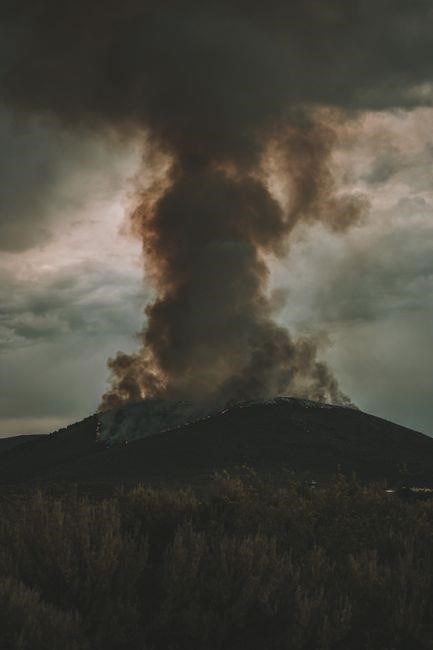
The PDF immerses readers in Area X, a liminal landscape that defies conventional physics. Dense black pine forests give way to swampy wetlands, where reeds and twisted trees form labyrinthine corridors. Light flickers through broken canopy, casting shifting shadows that seem to move independently. The air smells of damp, metallic scent, and the ground is a mosaic of moss, mud, and crystalline formations reflecting impossible geometries. Strange flora emits bioluminescent glows, while fauna appear hybridized, translucent forms blurring the line between animal and plant. The environment reacts to the expedition’s presence, altering terrain in real time, creating new pathways or sealing old ones. This dynamic setting amplifies psychological tension, as characters cannot rely on memory or maps. The Zone’s surreal qualities serve as a narrative device, forcing protagonists to confront fears and limits of human understanding. The setting is not merely backdrop but active participant, reshaping the journey and challenging the notion of a stable reality.
Readers are drawn into the Zone’s uncanny silence, where the sky shifts from a pale blue to an eerie green, and the ground hums with unseen life. The expedition’s log entries become fragmented, hinting at a reality that resists description. Each step into the Zone feels like stepping into a living narrative, where the boundaries between the known and the unknown blur, and the psychological toll mounts as the team confronts the unknowable. Mystery deepens with each discovery!

Psychological Conflict
The PDF delves into the expedition’s internal turmoil, portraying how isolation, ambiguity, and the Zone’s uncanny phenomena erode mental stability. Each character’s backstory surfaces, revealing trauma that the environment amplifies. The psychologist, as de‑facto leader, struggles to maintain cohesion while confronting her own fear of losing control. The narrator, a biologist, experiences dissociation, questioning reality as the Zone reshapes perception. The anthropologist’s analytical mind battles with instinctual dread, while the surveyor’s reliance on maps falters as terrain morphs. Conflicting narratives emerge: rational explanations clash with inexplicable phenomena, forcing the team to oscillate between scientific rigor and existential dread. The PDF captures moments of intense introspection, where characters confront identity, purpose, and the limits of human understanding. The psychological conflict is not merely external; it permeates every decision, dialogue, and observation, creating a tense, claustrophobic atmosphere that echoes the Zone’s own unsettling presence.
As the expedition progresses, the psychological strain intensifies. The constant threat of unknown forces and the inability to predict the Zone’s behavior lead to paranoia and mistrust. The leader’s attempts to enforce order are undermined by the crew’s growing anxiety, resulting in fragmented communication. The PDF presents these dynamics through vivid descriptions and introspective journal entries, offering readers a deep dive into the human psyche under extreme conditions.
Every choice becomes a test of resilience, and the narrative questions whether humanity can survive when confronted with an environment that defies logic.

Publication, Licensing, and Access
Annihilation PDF is freely available under the Project Gutenberg license, permitting unlimited copying, sharing, and modification. The text is in the domain, public, ensuring access without cost. User may download, print, or convert it to other formats for personal use.

Copyright and Project Gutenberg Compatibility
Annihilation PDF is distributed under the Project Gutenberg license, which grants users the right to copy, distribute, and modify the text freely. The original work is in the public domain, allowing unrestricted access worldwide. Users may download the PDF, convert it to EPUB or MOBI, or print it without any licensing fees. The Project Gutenberg license also permits derivative works, so educators and authors can adapt the text for teaching or creative projects. However, any new content added must be clearly marked and not infringe on the original author’s rights. The PDF is hosted on platforms that comply with the Gutenberg terms, ensuring the file remains accessible and no additional restrictions are imposed. If a user encounters a copyright claim, the Project Gutenberg community offers a DMCA takedown procedure, which requires the claimant to provide proof of ownership and a request to remove the file. The process is transparent and aims to protect both the public domain status and the rights of legitimate copyright holders. Users are encouraged to cite the source and acknowledge the original author, Jeff VanderMeer, when using the text in research or publications. This transparency maintains the integrity of the public domain while respecting the original creator’s contribution. Additionally, PDF preserves typography and layout, allowing readers to experience the text as it was published. File size is quick, ensuring bandwidth can access the novel today. Share your thoughts freely today. Feel free to share insights and questions the novel today now.