
Los Angeles Police Department Manual: A Comprehensive Overview
The Los Angeles Police Department Manual represents a compilation of current departmental policies, procedures, and rules, serving as a vital resource for all personnel.
This comprehensive document, last updated on October 14, 2025, details organizational structure, functions, and crucial guidelines, including those related to Senate Bills 1421 & 16.
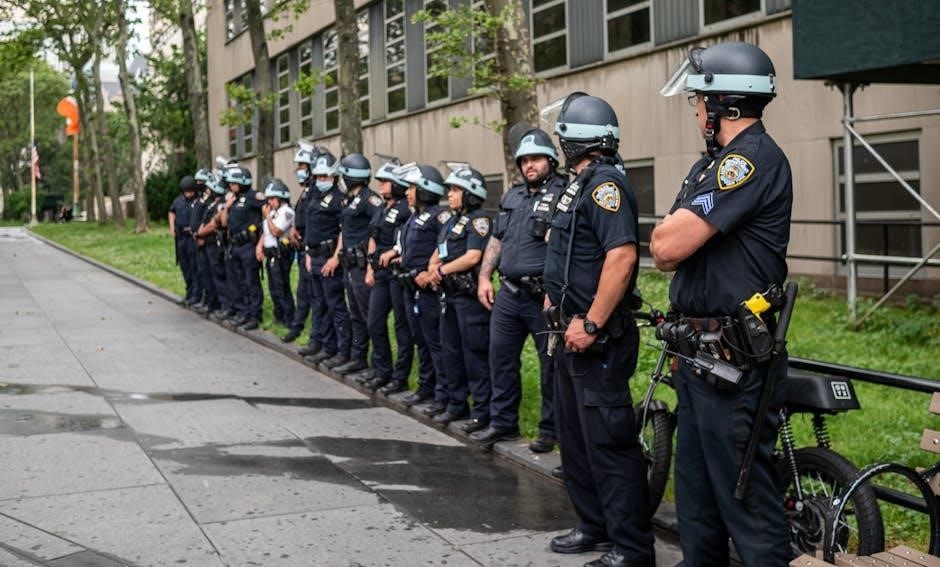
Historical Context and Evolution of the Manual
The evolution of the Los Angeles Police Department Manual mirrors the department’s own growth and adaptation to changing societal expectations and legal landscapes. Initially, departmental guidance existed as a series of scattered orders and memos, lacking the cohesion of a centralized manual.
Over time, recognizing the need for standardized practices and clear accountability, the LAPD began consolidating these directives. Early iterations focused primarily on operational procedures and internal discipline. As the city of Los Angeles expanded and faced new challenges – from civil unrest to evolving crime patterns – the manual correspondingly broadened in scope.

Significant milestones in the manual’s development include the incorporation of policies addressing civil rights, use of force, and community policing. The influence of landmark legal cases and legislative changes, such as the recent Senate Bills 1421 and 16 concerning transparency and disclosure of officer records, are prominently reflected in updated sections. The manual’s ongoing revision process, with quarterly updates, demonstrates a commitment to remaining current and responsive to the needs of both the department and the public it serves. It’s a living document, constantly refined to ensure effective and ethical policing.

Structure and Organization of the LAPD Manual
The Los Angeles Police Department Manual is meticulously structured to facilitate efficient access to information for its personnel. It’s currently organized into distinct volumes, each addressing a specific facet of departmental operations and policy.
Volume 0: General Provisions establishes the foundational principles governing the department. Volume 1: Policy – Core Principles details the overarching philosophies guiding officer conduct and decision-making. Volume 2: Organization and Functions of the Department outlines the hierarchical structure and responsibilities of various divisions and units.
Beyond these core volumes, specialized sections address critical areas such as use of force, citizen complaint procedures, internal affairs investigations, and data collection. The manual also incorporates specific guidelines related to recent legislation like Senate Bills 1421 & 16, ensuring compliance with transparency requirements. An index provides a searchable directory of topics, while a dedicated section houses the department’s Code of Ethics. Quarterly updates are systematically integrated, maintaining the manual’s relevance and accuracy. This layered structure ensures clarity and accessibility for all LAPD personnel.
Volume 0: General Provisions
Volume 0 of the Los Angeles Police Department Manual serves as the bedrock of departmental policy, establishing fundamental principles and guidelines applicable to all personnel. This foundational volume outlines the core values underpinning the LAPD’s operations, emphasizing commitment to leadership within law enforcement.

It details broad directives concerning professional conduct, ethical standards, and the overall mission of the department. Key provisions address the importance of integrity, accountability, and respect for the community served. This volume also establishes the framework for interpreting and applying policies detailed in subsequent sections of the manual.
Furthermore, Volume 0 clarifies the scope of authority granted to LAPD officers and defines the boundaries within which they must operate. It reinforces the department’s dedication to upholding the law while safeguarding the rights of all individuals. The commitment to leadership, as stated within, guides every member of the LAPD in their duties and responsibilities.
Volume 1: Policy – Core Principles
Volume 1 of the Los Angeles Police Department Manual delves into the core principles that govern all departmental actions and decision-making processes. This section expands upon the general provisions outlined in Volume 0, providing detailed guidance on specific policy areas.
Central to this volume is a comprehensive articulation of the LAPD’s commitment to constitutional policing, emphasizing the protection of civil rights and liberties. It establishes clear guidelines regarding interactions with the public, ensuring fairness, impartiality, and respect in every encounter. Policies related to bias-based policing, de-escalation techniques, and the use of force are thoroughly addressed.
Furthermore, Volume 1 outlines the department’s stance on transparency and accountability, reinforcing the importance of open communication and responsible conduct. It details procedures for handling citizen complaints and conducting internal investigations, ensuring that all allegations of misconduct are thoroughly examined. This volume serves as a cornerstone for maintaining public trust and upholding the highest ethical standards within the LAPD.
Volume 2: Organization and Functions of the Department
Volume 2 of the Los Angeles Police Department Manual provides a detailed overview of the department’s organizational structure and the specific functions of each division and unit. This section is crucial for understanding the chain of command, lines of authority, and areas of responsibility within the LAPD.
It meticulously outlines the roles and responsibilities of various bureaus, including Patrol, Investigations, and Support Services, detailing their respective missions and operational procedures. The manual clarifies the relationships between different units, fostering effective collaboration and coordination. It also defines the scope of authority for specialized units, such as the Gang and Narcotics Division and the Air Support Division.
Furthermore, Volume 2 explains the department’s deployment strategies, resource allocation processes, and emergency response protocols. This comprehensive overview ensures that all personnel understand their place within the larger organizational framework and can effectively contribute to the LAPD’s overall mission of protecting and serving the city of Los Angeles.
Key Policies Regarding Use of Force
The Los Angeles Police Department Manual dedicates significant attention to outlining key policies governing the use of force by its officers. These policies are designed to ensure that force is used judiciously, proportionally, and only when necessary to achieve a legitimate law enforcement objective.

The manual details a graduated response model, emphasizing de-escalation techniques and the use of minimal force necessary to control a situation. It clearly defines the circumstances under which various levels of force – from verbal commands to lethal force – are authorized. Officers are instructed to exhaust all reasonable alternatives before resorting to force, and to continuously assess and adjust their response based on the evolving circumstances.
Furthermore, the policies emphasize accountability and require officers to thoroughly document any use of force incident, including a detailed justification for the force employed. These guidelines are regularly reviewed and updated to reflect best practices and legal requirements, ensuring alignment with community expectations and constitutional standards.
Procedures for Handling Citizen Complaints
The Los Angeles Police Department Manual establishes comprehensive procedures for receiving, investigating, and resolving citizen complaints against its officers. These procedures are designed to ensure fairness, transparency, and accountability in addressing allegations of misconduct.
The manual outlines multiple avenues for citizens to file complaints, including in-person reporting, online submission, and mail-in options. All complaints are acknowledged promptly, and an initial assessment is conducted to determine the appropriate level of investigation. Investigations are typically conducted by the department’s Internal Affairs Group (IAG), or in some cases, by a designated command staff member.
The procedures detail the steps involved in gathering evidence, interviewing witnesses, and obtaining statements from the involved parties. Upon completion of the investigation, a finding is made, and appropriate action is taken, ranging from exoneration to disciplinary measures. Citizens are informed of the outcome of the investigation, within legal limitations, and have the right to appeal the decision.
Internal Affairs Investigations: Policies and Protocols
The Los Angeles Police Department Manual dedicates significant detail to the policies and protocols governing Internal Affairs Investigations (IAI). These investigations are initiated in response to allegations of misconduct by department personnel, encompassing a wide range of offenses, from excessive force to policy violations and criminal activity.
The manual outlines strict guidelines regarding the confidentiality of IAI proceedings, protecting the rights of both the complainant and the accused officer. It details procedures for evidence collection, witness interviews, and the use of investigative techniques, ensuring due process and fairness. A key protocol involves maintaining a clear chain of custody for all evidence.
Furthermore, the manual specifies the disciplinary actions that may be imposed following a sustained finding of misconduct, ranging from counseling and retraining to suspension or termination. It emphasizes the importance of thorough documentation throughout the entire investigative process, and outlines the appeals process available to officers facing disciplinary action.
Senate Bills 1421 & 16: Transparency and Disclosure
The Los Angeles Police Department Manual reflects the significant impact of California Senate Bills 1421 and 16, legislation designed to increase transparency and public access to records related to police misconduct and use of force. These bills fundamentally altered the department’s policies regarding the disclosure of information previously considered confidential.
The manual details specific procedures for releasing records pertaining to officer-involved shootings, serious uses of force, sustained findings of dishonesty, and sexual misconduct. It outlines the criteria for determining what information is subject to public release, balancing the need for transparency with the protection of privacy rights and ongoing investigations.
Furthermore, the manual addresses the requirements for proactively disclosing certain records online, and establishes timelines for responding to public records requests. It clarifies the process for redacting sensitive information, and provides guidance to personnel on complying with the new disclosure requirements. The LAPD Manual emphasizes adherence to these laws to foster public trust and accountability.
Data Collection and Reporting Procedures
The Los Angeles Police Department Manual dedicates substantial sections to outlining rigorous data collection and reporting procedures, essential for informed decision-making, resource allocation, and performance evaluation. These procedures cover a wide range of activities, including crime statistics, use-of-force incidents, citizen complaints, and traffic stops.
The manual specifies standardized forms and electronic systems for collecting data, ensuring consistency and accuracy. It details the required elements for each report, including date, time, location, individuals involved, and a narrative description of the event. Clear guidelines are provided on data classification, storage, and security to maintain confidentiality and integrity.
Furthermore, the manual outlines reporting timelines and responsibilities, designating specific personnel accountable for submitting data to various internal and external agencies. It emphasizes the importance of timely and accurate reporting for statistical analysis, trend identification, and the development of effective crime prevention strategies. Adherence to these procedures is paramount for maintaining public trust and accountability.
Training Requirements for LAPD Personnel
The Los Angeles Police Department Manual meticulously details comprehensive training requirements for all personnel, spanning from new recruits to seasoned officers. These requirements are designed to equip officers with the knowledge, skills, and abilities necessary to effectively perform their duties while upholding the highest standards of professionalism and ethical conduct.
Initial training for recruits encompasses legal updates, de-escalation techniques, community policing principles, and procedural justice. Ongoing professional development includes annual refresher courses on use-of-force policies, crisis intervention, and cultural sensitivity. Specialized training is mandated for assignments such as detective work, gang enforcement, and traffic management.
The manual emphasizes the importance of continuous learning and adaptation to evolving law enforcement best practices. It outlines specific training hours required for various disciplines and details the approval process for external training programs. Documentation of completed training is meticulously maintained, ensuring all officers meet the department’s rigorous standards and remain proficient in their roles.
Vehicle Operation and Pursuit Policies
The Los Angeles Police Department Manual dedicates significant attention to vehicle operation and pursuit policies, recognizing the inherent risks associated with high-speed maneuvers. These policies are designed to balance the need for effective law enforcement with the paramount importance of public safety and officer well-being.
The manual outlines strict guidelines regarding when a vehicle pursuit is authorized, emphasizing that pursuits should only be initiated when the suspect poses an immediate threat to life or is attempting to commit a violent felony. It details specific criteria for terminating a pursuit, such as the presence of pedestrian traffic, hazardous road conditions, or the loss of probable cause.
Officers are required to receive specialized training in defensive driving techniques and pursuit tactics. The manual also addresses the use of vehicle technology, such as radar and LoJack, during pursuits. Detailed reporting procedures are mandated following any vehicle pursuit, ensuring thorough review and analysis to identify areas for improvement and prevent future incidents.
Communication Protocols and Procedures
The Los Angeles Police Department Manual establishes comprehensive communication protocols and procedures vital for effective coordination and response during all law enforcement operations. These guidelines ensure clarity, accuracy, and efficiency in information exchange among officers, dispatchers, and other relevant agencies.
The manual details standardized radio codes and terminology to minimize ambiguity and facilitate seamless communication. It outlines procedures for emergency communications, including the use of priority channels and clear articulation of critical information. Specific protocols are in place for inter-agency communication, ensuring interoperability with other law enforcement and emergency services.

Furthermore, the manual addresses the proper use of mobile data terminals (MDTs) and other digital communication tools. It emphasizes the importance of maintaining secure communication channels to protect sensitive information. Regular training is mandated to ensure all personnel are proficient in utilizing the department’s communication systems and adhering to established protocols, contributing to overall operational effectiveness.
Digital Evidence Handling and Preservation
The Los Angeles Police Department Manual dedicates significant attention to the proper handling and preservation of digital evidence, recognizing its increasing importance in modern investigations. These procedures ensure the integrity, authenticity, and admissibility of digital evidence in court proceedings.

The manual outlines strict guidelines for the collection, storage, and documentation of all forms of digital evidence, including data from computers, mobile devices, and surveillance systems. It emphasizes maintaining a clear chain of custody to prevent tampering or contamination. Specific protocols address the use of forensic tools and techniques for extracting and analyzing digital data.
Furthermore, the manual details procedures for securing digital evidence against unauthorized access and ensuring its long-term preservation. Regular audits are conducted to verify compliance with established protocols. Comprehensive training is provided to personnel involved in handling digital evidence, equipping them with the necessary skills and knowledge to maintain evidentiary integrity throughout the investigative process.
Body-Worn Camera Policy and Guidelines
The Los Angeles Police Department Manual establishes a comprehensive policy governing the use of body-worn cameras (BWCs) by its officers. This policy aims to enhance transparency, accountability, and trust within the community, while also providing valuable evidence for investigations.
The manual details specific guidelines regarding when officers are required to activate their BWCs, including during interactions with the public in enforcement capacities. It also addresses situations where recording may be limited or prohibited, balancing privacy concerns with the need for documentation. Procedures for data storage, access, and retention are clearly defined, ensuring compliance with legal requirements.
Furthermore, the policy outlines protocols for reviewing BWC footage, including procedures for citizen requests and internal investigations. Regular training is provided to officers on the proper use and maintenance of BWCs, as well as the department’s policy regarding their operation. The manual emphasizes the importance of adhering to these guidelines to maintain the integrity of the BWC program.
Code of Ethics and Professional Conduct
The Los Angeles Police Department Manual dedicates significant attention to its Code of Ethics and standards of professional conduct, emphasizing integrity as the cornerstone of law enforcement. This section outlines the core values expected of all LAPD personnel, fostering public trust and maintaining the department’s reputation.
The manual details expectations regarding honesty, impartiality, and respect in all interactions, both on and off duty. It explicitly prohibits corruption, abuse of power, and any form of misconduct that could compromise the integrity of the department. Officers are held to a high standard of ethical behavior, reflecting the seriousness with which the LAPD views its responsibility to the community.
Furthermore, the Code of Ethics addresses conflicts of interest, proper use of departmental resources, and the importance of maintaining confidentiality. It reinforces a commitment to leadership and emphasizes the individual responsibility of each officer to uphold these principles. Adherence to this code is paramount, and violations can result in disciplinary action.

Quarterly Updates and Manual Revision Process
The Los Angeles Police Department Manual isn’t a static document; it undergoes regular review and revision to ensure it reflects current laws, best practices, and evolving departmental needs. A formalized process governs these updates, occurring on a quarterly basis to maintain relevance and effectiveness.
Each quarter, designated personnel assess the manual’s content, incorporating feedback from officers in the field, legal counsel, and community stakeholders. Amendments address changes in legislation – like those stemming from Senate Bills 1421 & 16 – and incorporate lessons learned from critical incidents. Proposed revisions are circulated for review and comment before final approval.
This iterative process ensures the manual remains a dynamic tool, providing clear guidance to officers. The revision history is meticulously maintained, documenting all changes and the rationale behind them. Transparency is key, with updated versions readily accessible to all LAPD personnel, fostering accountability and consistent application of departmental policies and procedures.